The year 2024 is already just around the corner, and many brands are facing old and new challenges in media mix planning. What are competitors doing? How much should you invest? How much continuous advertising is needed? What is the role of each medium individually and together?
These are the questions marketing departments are now trying to answer.
I would divide the things to consider into three categories: changes in consumer behaviour, the competitive landscape, and other matters.

Changes in consumer behaviour
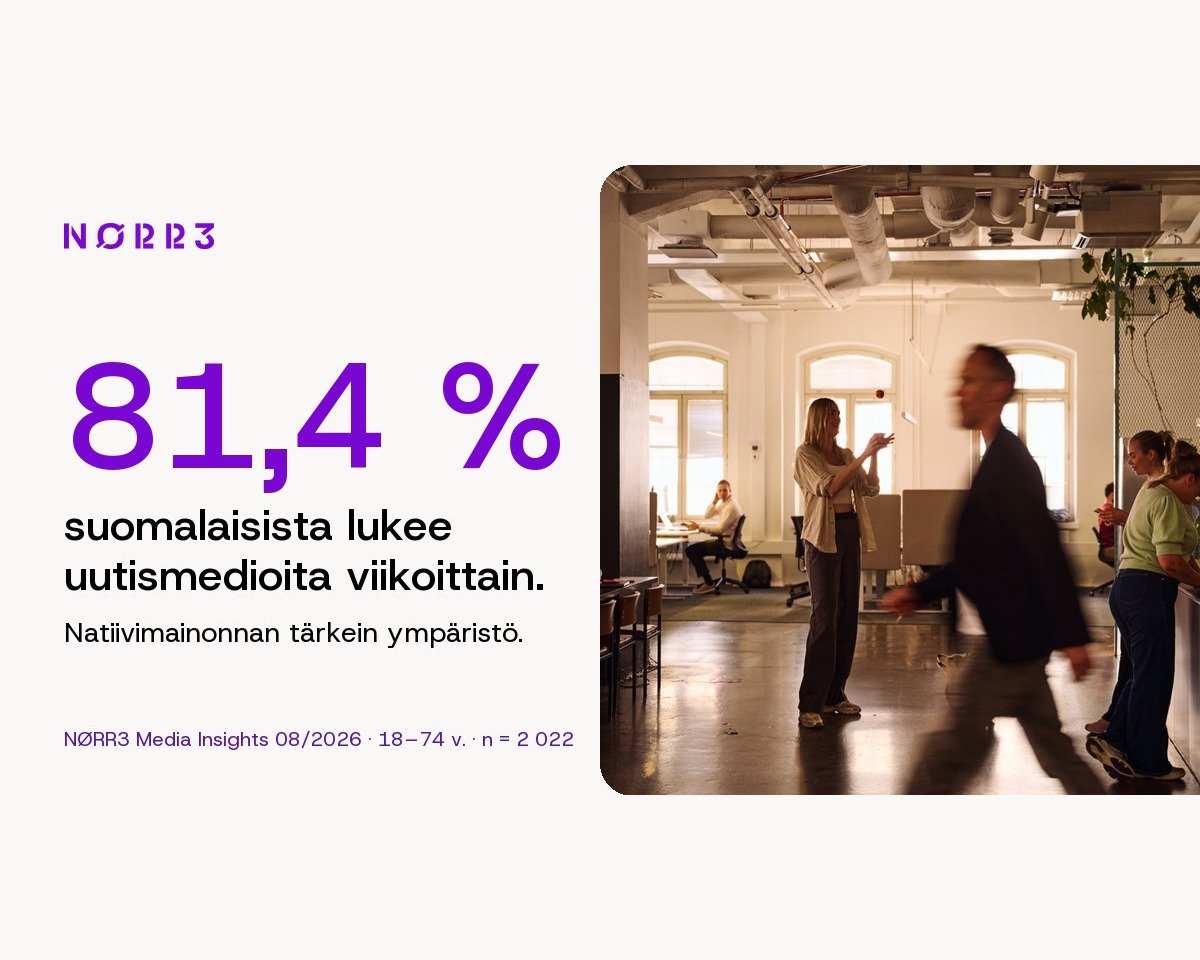
For the under-40s, reviewing the media mix is key. Print and linear broadcast media are in decline. Streaming services, naturally, are on the rise. In 2024 this shift is already so concrete that it’s high time to review your current media mix – especially if it has been the same for a long while.
What about the over-40s? Media behaviour is changing there too, and keeps changing. For example, only 26% of over-60s (of whom there are more than 1.3 million) now read printed evening papers weekly, and two thirds read subscribed printed newspapers. The same group, by the way, already watches Finnish streaming services weekly at a rate of 69% and YouTube at 40%.
Technology pushes into everything and every age group, so alongside age targeting, values and attitudes matter a great deal. Twenty years ago using a mouse was a struggle for most of the older population; now nearly 70% of that same age group streams video. Mobile use keeps growing in all age groups.
Responsibility keeps growing, showing up especially in creative planning, which in turn affects media choices. The media themselves have a place in this conversation too: should you advertise on X, or TikTok? Favour Finnish vs. foreign media?
Competitive landscape
When planning the media mix, the three critical things to watch in competitors are advertising volume, channels used, and awareness.
Advertising volume is available weekly or monthly across all media groups, either directly or by calculation. Use a rear-view mirror that reaches far enough back. Most of competitors’ media spend is campaign-driven, so the key is to identify the timing of advertising. It tends to follow the same pattern year after year.
Reviewing past media mixes helps you see where there’s room to stand out and which channels are crowded, and when. Worth examining are possible over-investment in certain channels, significant differences in investment levels, or a lack of planning between traditional and digital advertising.
Of the three, awareness is the hardest. Brands that have systematically tracked awareness monthly or quarterly have bright prospects for planning a winning media mix. For brands with low awareness the question is harder. Know your competitors’ benchmark figures before deciding.
With strong awareness you need less continuous or tactical advertising. It works a bit like strong SEO, which means you need less SEM. In a weak sales period it’s tempting to cut corners and invest more in the tactical side. But this too can be calculated, and is highly recommended especially for budgets above €500,000 a year.
Other matters
The other things worth considering vary between companies. Online retailers must think more about the online competitive landscape and findability there, while FMCG clients have to weigh media investment levels together with retailers, audience movement around stores, and so on.
One important and somewhat surprising consideration here is content. Quite often we agency people get involved in debates about creative lengths and emphasis. We recommend bringing creatives and their use into media mix discussions right from the start, because they significantly affect reach, frequency and contact figures. The alpha and omega of media planning is objectives – what you want advertising to achieve. For brand and tactical advertising the media mix can look very different.
How to move forward
One recommended way to get moving is to gather the available data from the areas above – and of course all other useful data. Visualising the data then lets you make the first findings. When you combine data you can, for example, calculate the regression between awareness or preference and media investment – for all competitors. The goal is to find the optimal media budget and model how many euros are needed to achieve each additional unit.
The benefits
In experienced hands, planning a winning media mix well ahead of the coming year creates an extremely important foundation for all marketing. Operations shift from vague to planned, everyone works towards the same goals, significant sums are saved in media investment, and suddenly other units beyond marketing start taking an interest too. In the best case the investment also gets a return expectation, becomes a business case, and you can justifiably push through larger investments.
FAQ
What is a winning media mix?
A plan for the whole coming year's media investment, built on data: audience media use, awareness, preference and competitor figures. Without it, media choices easily rest on gut feeling.
What data do you need to build a media mix?
Audience media use, the development of awareness and preference on a monthly or quarterly level, competitor benchmarks, and the reach, frequency and contact figures of the media. Gather and visualise all available data so the first findings appear.
When should the media mix work be done?
In December. That is when the biggest media houses are ready to give their best discounts, because every seller wants the deal closed before the turn of the year — even at the level of a letter of intent.
At what budget does the media mix work pay off?
Especially at annual budgets above EUR 500,000. At that level the data allows a regression between awareness or preference and media investment, and modelling how many euros each additional unit requires.
What are the benefits of a media mix?
Operations move from vague to planned, the whole organisation pulls towards the same goals, and significant sums are saved in media investment. At best the investment gets a return expectation, a business case is built, and larger investments can be justified.
Antti UjainenThe author is the founder of insight and media agency NØRR3 and a strategist who likes to get his hands dirty.
PS. Even though traditional annual contracts have partly been abandoned, it’s still worth doing the media mix work in December and securing good discounts from the biggest media houses. Every seller wants the deal done before year-end – even at the level of a letter of intent.

Share
LinkedIn